
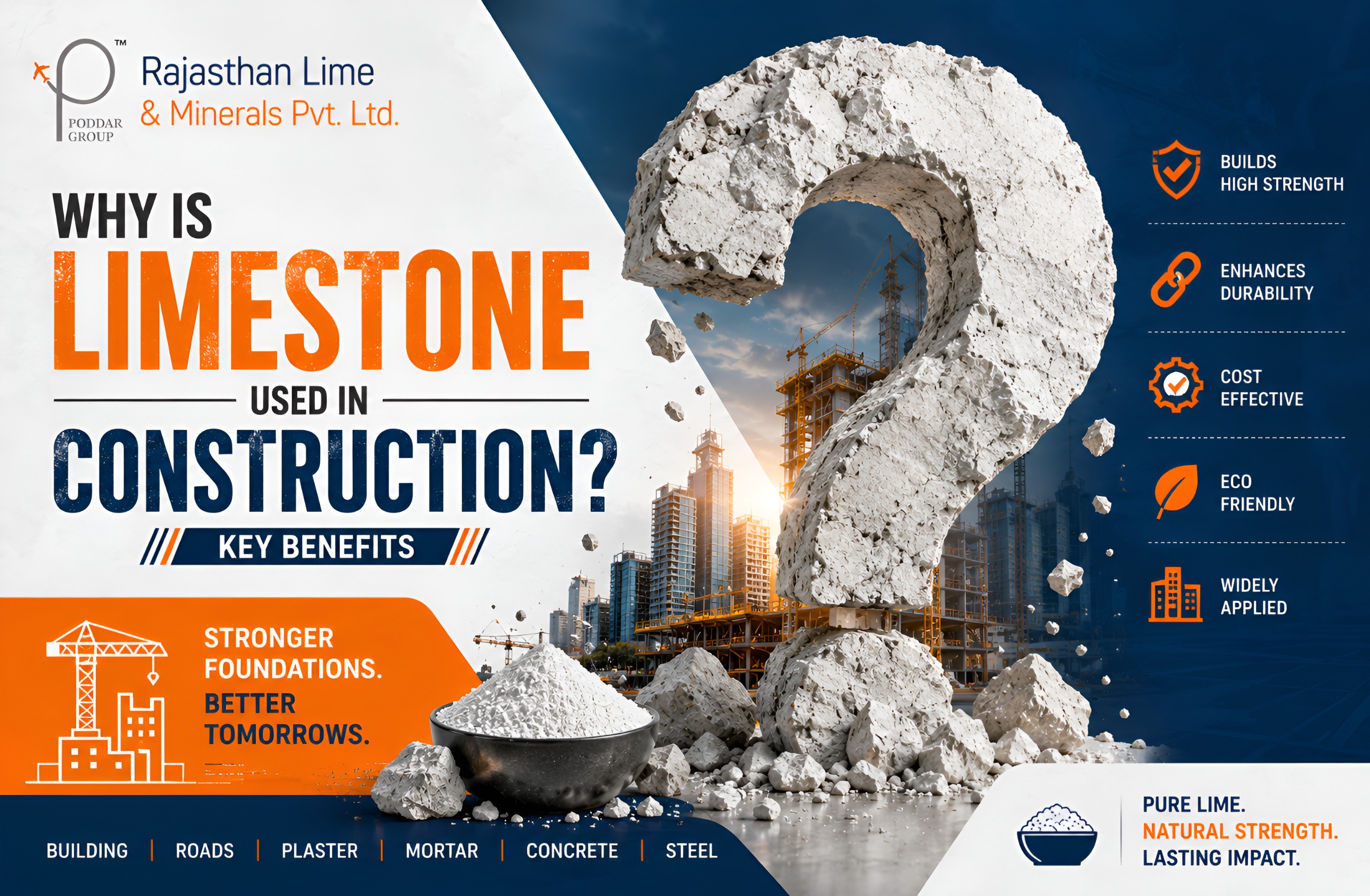
Limestone is one of the most widely used naturally available materials in India across various industries for different types of applications. One of those industries is construction, where it is used because it is versatile, workable, and available in forms ranging from dimension stone to crushed aggregate and as a major raw material for cement. It boasts many valuable properties that influence its use in stone masonry, facades, flooring, roads, concrete, and cement production. If you need to use the material in construction, then you need to know about its many helpful properties that revolve around absorption, durability, exposure conditions, and more.
What Are the Useful Properties of Limestone in Construction?
Limestone is valued in construction because it combines useful physical properties with relatively easy processing. Before you buy this material from limestone suppliers Rajasthan, you should know about its helpful properties. The following are some of its properties that drive its benefits the most:
1. Good Compressive Strength
Limestone can provide adequate compressive strength for several construction applications, and this strength varies by the type of limestone being used.
- Dense varieties of limestone can be suitable for specific masonry and dimension-stone applications.
- Compressive strength helps determine whether a stone is appropriate for a particular load-bearing use.
- The required strength depends on the project’s design, loading conditions, and applicable standards.
2. Workability and Ease of Shaping
There are many varieties of limestone that can be cut, sawn, dressed, and shaped easily according to requirements. It can also be crushed to make a powder for different limestone powder uses. This property of limestone as a building material has made it useful for architectural elements where a natural material needs to be produced in specific dimensions or finishes. This property of limestone explains that limestone:
- Can be cut into blocks, slabs, and other required dimensions.
- Can be dressed or finished for architectural applications.
- Supports detailed carving and decorative work in suitable varieties.
- Can make fabrication easier compared with some harder natural stones.
3. Suitable Density and Porosity
Density and porosity are two properties of limestone that explain how this material behaves when exposed to moisture, loads, and environmental conditions.
- Density provides information about the mass and compactness of the stone.
- Porosity shows the amount of pore space in the material.
- Water absorption of limestone helps assess how readily the stone takes up moisture.
- Lower or controlled porosity may be desirable for certain exposed applications.
4. Durability
There are many limestone applications that occur due to the good durability of this material. This property shows the similarities in the role of limestone in glass manufacturing and construction. However, durability is not identical across all types of limestone because geological composition, porosity, weather exposure, and maintenance can influence the performance of the material.
- Suitable varieties can provide long service in properly selected applications.
- Durability depends on exposure to moisture, temperature changes, and pollutants.
How Is Limestone Used in Construction?
There are a large number of uses of limestone in the construction sector. These uses include installing it as a finished natural stone, crushing it for use as aggregate, or processing it as a raw material for cement and lime. The following are all the limestone used in construction:
- Building blocks and masonry
- Flooring, cladding, and facades
- Concrete and asphalt aggregate
- Manufacturing of cement to be used in construction
- Processing to make lime and other construction materials
What Are the Benefits of Using Limestone in Construction?
The benefits of limestone in construction purposes are a result of its versatility, workability, availability in different forms, and usefulness in the manufacturing of construction materials. It is used as a finished building material as well as a raw material to manufacture essential products. The following are some uses of limestone construction material:
Supports Multiple Construction Applications
Limestone can serve several purposes across the construction industry.
- It can be used as an architectural and dimension stone.
- It can be crushed and processed as a construction aggregate.
- It serves as a major raw material for cement.
- It can be processed into lime for specific applications.
Offers Architectural Flexibility
Natural limestone provides architects with a variety of options in colour, texture, cutting, and finishing. Depending on these varieties, you can use limestone to create both traditional and contemporary architectural designs.
- It is available in different natural colours and textures.
- It can be cut into slabs, blocks, and other shapes.
- It can receive different surface finishes.
- It is suitable for selected decorative, interior, and exterior applications.
Selected According to Performance Requirements
Limestone can be assessed through tests that examine properties such as water absorption, porosity, density, compressive strength, and abrasion resistance. Depending on the results of these tests, it is used for different applications.
- Water absorption can help assess moisture-related behaviour.
- Porosity provides information about internal pore structure.
- Compressive strength helps assess load-related performance.
- Abrasion resistance can be relevant to flooring and high-traffic applications.
Has an Important Role in Infrastructure
Limestone is important not only for houses and commercial buildings but also for roads and other infrastructural elements. In infrastructure, crushed limestone can contribute to aggregate requirements, while limestone-derived cement is important for concrete construction. Overall, limestone is used to:
- Contribute aggregate for concrete and asphalt.
- Support cement manufacturing.
- Construct roads and other civil-engineering works.
Conclusion
Limestone is used with massive dependence in the construction industry, as this material combines versatility, workability, and useful engineering properties. These properties turn out to be appropriate for your applications and help you reach your desired final outcome only if the limestone you purchase is of good quality. To ensure good quality as a regular buyer, you need to choose a good supplier of the material.
Contact us at Rajasthan Lime to get limestone and other lime products of your desired quality and quantity at an affordable price.
Frequently Asked Questions (FAQs)
Q. Is limestone used in cement?
Yes, limestone is the primary raw material used to make cement, as it makes up 60% to 65% of the mass of the cement.
Q. In which industry is limestone primarily used?
Limestone is primarily used in construction to make cement and concrete for buildings and roads.
Q. Can limestone be used for walls?
Yes, limestone can be used for making walls due to its high durability.