
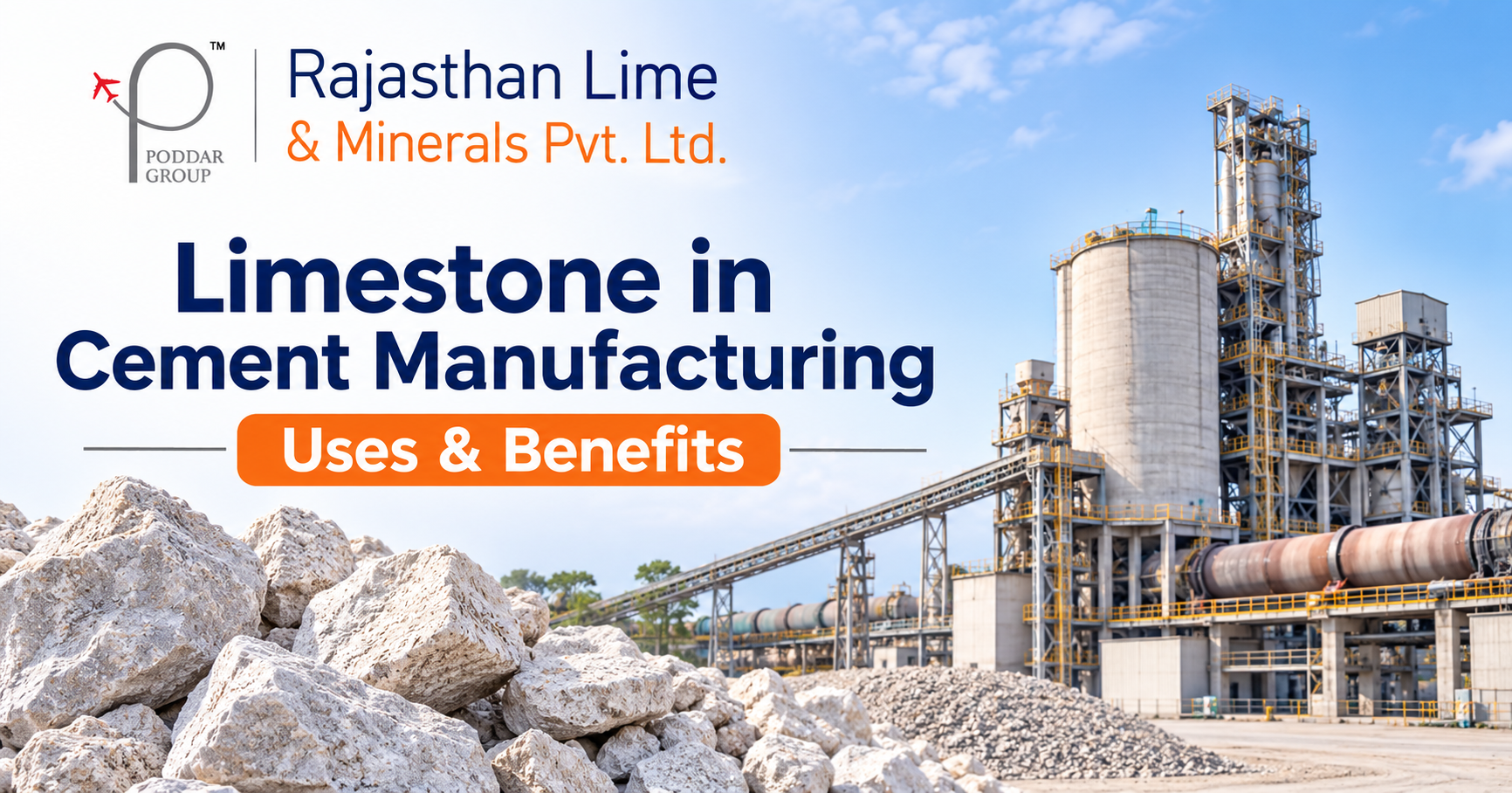
One of the most important materials used in cement manufacturing is limestone. It is primarily used as a source of calcium carbonate and supplies the calcium required to produce the compounds responsible for cement’s strength and binding properties. The quality of limestone you choose directly influences the quality of cement that would be formed. Hence, before purchasing limestone, you need to know what properties describe the importance of limestone in cement manufacturing, its benefits, and much more.
How Is Limestone Used in Cement Manufacturing?
Limestone is used as the primary calcareous raw material in cement manufacturing, not just in one stage but in several stages, for many purposes. The following is how limestone is used in cement manufacturing after you purchase it from the best limestone suppliers Rajasthan.
1. Quarrying and Extraction
The process of quarrying and extraction involves site preparation and drilling, blasting, loading, transportation, and quality sampling.
2. Crushing and Pre-Blending
In the stage of crushing and pre-blending, limestone is crushed into smaller fragments. Later, primary and secondary crushing depend on the hardness of the material. At the end of the stage, limestone is transferred to storage facilities or pre-blending yards.
3. Raw Material Grinding and Mixing
Limestone is mixed with materials like clay, shale, silica sand, or iron ore. The proportions of different materials are decided with the help of various parameters, such as Lime Saturation Factor (LSF), Silica Modulus (SM), and Alumina Modulus (AM).
4. Calcination and Clinker Formation
The material enters a preheater and precalciner system to undergo the calcination process and form calcium oxide. The calcium oxide then reacts with silica, alumina, and iron oxide to form clinker minerals. The clinker compounds include tricalcium silicate, dicalcium silicate, tricalcium aluminate, and tetracalcium aluminoferrite.
5. Final Grinding and Cement Production
Clinker is cooled and transported to the cement grinding section and ground with gypsum. The grinding process determines how fine the cement will turn out to be, which later influences its hydration and strength.
Why Is Limestone Used in Cement Manufacturing?
Limestone is preferred in cement manufacturing because it provides an abundant and economical source of calcium, an essential element in cement. The following factors explain its importance, which you should know before buying it from calcined lime suppliers Rajasthan.
1. Provides Calcium for Cement Production
The most important role of limestone in cement production is that it provides calcium for cement production. Without a proper source of calcium, you cannot produce clinker with the needed mineral composition.
2. Supports Clinker Formation
Clinker production depends on carefully controlled reactions between the calcium oxide, silica, alumina, and iron oxide. Limestone supplies the calcium needed to form the minerals of clinker, particularly tricalcium silicate and dicalcium silicate.
3. Offers Wide Availability
Limestone is a very accessible material that occurs naturally in many regions. Hence, it can be easily used for large-scale production if it matches the needed quality.
4. Helps Control Manufacturing Costs
Besides being widely available, limestone is a cost-effective source of calcium compared to many alternative calcium-bearing materials.
What Are the Properties of Limestone Used in Cement Manufacturing?
Generally, cement plants do not select limestone based on its appearance before purchasing it from limestone manufacturers Rajasthan. Rather, they evaluate its mineral content, impurities, moisture, hardness, and processing behaviour. These are the chemical and physical properties of the material that define the various limestone uses in cement production. All these properties ideally required in limestone for cement making are listed below:
- High calcium carbonate content.
- Controlled volume of magnesium oxide.
- Appropriate silica, alumina, and iron content.
- Negligible impurities such as alkalis, chlorides, sulphur compounds, and other organic matter.
- Appropriate hardness and grindability.
- Controlled moisture content.
Conclusion
The role of limestone is a really important one in every stage of cement production, whether it be quarrying, extraction, crushing, pre-blending, raw material grinding, calcination, clinker formation, or anything else. Its availability and quality cannot be compromised with if you want the desired quality of cement. This quality of the material depends on factors such as calcium carbonate content, magnesium oxide levels, impurities, moisture, and grindability.
The right quality of limestone material can be provided only by a good supplier. If you are currently searching for the best limestone supplier, then your search should end at Rajasthan Lime, one of the best limestone suppliers in India for the past four decades.
Frequently Asked Questions (FAQs)
Q. What does limestone do to cement?
Limestone serves as the main chemical raw material of cement to provide it with its strength and binding properties.
Q. What is another name for limestone?
Limestone is also called calcium carbonate.
Q. How is limestone used in cement production?
Limestone is used in cement production by crushing it, mixing it with other materials like clay, and heating it in a rotary kiln to form clinker, and then grinding it into powder form with gypsum.
Q. How much limestone is used in cement?
The percentage of limestone used in cement depends on the type of cement being formed.