
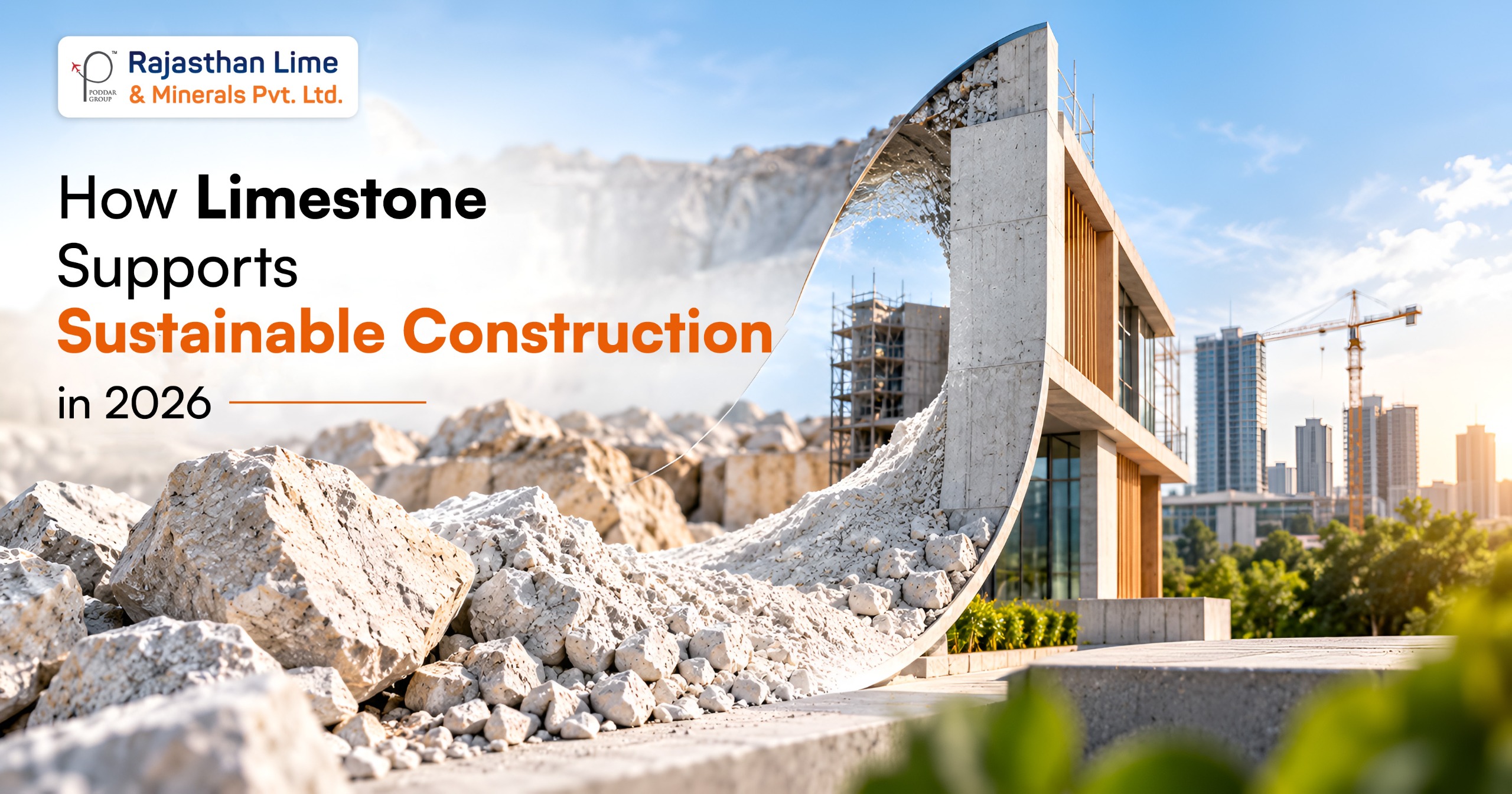
Limestone is one of the most valuable materials in the present due to its various industrial applications. One of the many industries it is used in is the construction field; more specifically, sustainable construction. Limestone in green construction can serve several roles across the built environment, including dimension stone, crushed aggregate, concrete inputs, road-base material, and a key raw material for cement and lime. While its contribution is huge, the results of its use depend greatly on how it is quarried, processed, transported, specified, and the process of its use.
How Does Limestone Help in Green Construction?
Limestone supports sustainable construction through its versatility and durability, in addition to being an easily available mineral resource. Before you use this material, you need to learn how limestone bought from the best lime steel manufacturers in Jodhpur can help you in sustainable construction practices.
1. Provides Durability
To ensure sustainable construction, the durability of limestone material is important, as it can reduce the frequency of repair and replacement. Due to its durability, it can be used for cladding, paving, flooring, walls, and architectural work.
- Suitable limestone can provide long service life in appropriate applications.
- Lower replacement frequency can reduce material consumption over a building’s complete lifecycle.
- Surface finish and maintenance requirements should be considered along with initial material selection.
2. Used as a Construction Aggregate
Crushed limestone for green building is widely used as an aggregate in construction-related applications such as concrete, road bases, subbases, and other civil engineering works. It affects the concrete performance, pavement behaviour, drainage characteristics, and overall durability.
- Crushed limestone can be used in concrete and infrastructure applications.
- Grading can support efficient mix design and the performance of the material.
- Locally available aggregate can reduce transportation requirements.
3. Provides Versatility
Another major advantage of using limestone in green construction is its versatility. The same geological resource can be processed into products serving very different construction requirements. Depending on its characteristics, limestone bought from providers of the best lime for soil stabilization in India can become dimension stone, crushed aggregate, mineral filler, or a raw material for lime and cement.
- Dimension stone can be used where architectural or cladding performance is required.
- Crushed limestone can serve aggregate requirements.
- Finer limestone products can have applications as mineral additions or fillers.
- Limestone can also enter industrial processes for producing lime and cement.
4. Helps in Lower Carbon Cement Strategies
The use of limestone helps you move towards lower-carbon cement. It can be combined with calcined clay in limestone calcined clay cement (LC3), a system designed to reduce the amount of Portland clinker required while maintaining appropriate cement performance.
- LC3 uses limestone and calcined clay to replace the use of clinker in a significant volume.
- Lower clinker content can reduce process and energy-related emissions.
- The actual carbon reduction depends on raw materials, kiln efficiency, electricity, fuels, and mix design.
- Performance must still meet the applicable cement and concrete requirements.
5. Support Local and Regionally Sourced Construction
The duration and process of transporting limestone from one place to another contribute to the environmental impact of limestone construction materials. Where suitable limestone resources are available close to a project, sourcing them regionally can reduce haulage distances compared with importing equivalent materials from distant locations.
- Compare quarry-to-project transportation distances.
- Consider processing and crushing energy alongside transport.
- Evaluate the impact on the complete life-cycle of the construction.
Why Should You Choose Limestone for Construction?
There are several reasons why you should choose limestone in construction for the project and process of building it to be environmentally sustainable. The following are those reasons that you should keep in mind while buying this material from the best lime steel manufacturers in Rajasthan:
1. It Offers a Long Service Life
Limestone can provide durable surfaces and components when the selected stone is compatible with the project’s exposure conditions and maintenance requirements. However, you need to check several things about the limestone material you will be using to ensure this.
- Check the compressive strength of the material.
- Examine water absorption and density.
- Evaluate the weathering and exposure conditions of limestone.
2. It Has Multiple Construction Applications
The versatility of limestone in construction is well-known, as it can be used in different types of architectural elements as well as infrastructure components. Its applications include:
- Building façades and architectural elements
- Flooring and paving
- Concrete aggregate
- Road base and subbase
- Lime and cement production
3. It Can Work With Circular and Resource-Efficient Practices
From the overview of sustainable construction, you know that it focuses on reducing material waste and improving resource efficiency. Limestone is one of the most useful sustainable construction materials and can contribute to this approach when quarry outputs are efficiently utilized, and suitable stone waste is recovered or processed for other applications.
- Use appropriately sized products to reduce unnecessary cutting.
- Identify opportunities to use suitable processing residues.
- Consider recovered stone where technical requirements permit.
- Maintain material traceability when environmental claims are important.
4. It Can Support Performance-Based Material Selection
Sustainability of construction depends on how good the performance of the material you have selected is. Limestone for building materials can fit this approach because its suitability can be assessed through measurable properties.
- Specify measurable performance requirements.
- Avoid selecting material based solely on how it seems visually or its price.
How Can You Select the Right Quality of Limestone for Construction Use?
Before you purchase limestone, the deciding step of how sustainable your outcome would actually be happens in the form of choosing the right quality of limestone. Below is how you can select limestone from a provider of the top lime for soil stabilization in India:
1. Define the Intended Application
Different construction applications place different demands on limestone. Hence, you need to know the application of limestone to choose the right quality of this material. These applications could be any of the following:
- Dimension stone
- Concrete aggregate
- Road aggregate
- Subbase or base material
- Mineral filler or industrial application
2. Check Physical and Mechanical Properties
The physical and mechanical properties of limestone define how effective it will be for a specific application. These properties include the likes of:
- Density
- Water absorption
- Compressive strength
- Abrasion resistance
- Grading
- Durability
3. Examine Chemical Composition
Chemical composition becomes particularly important when limestone is being used as a raw material, cement-related input, or in applications where chemical compatibility of this material matters.
- Request a representative laboratory analysis.
- Check for the deleterious constituents.
- Consider alkali-aggregate reaction requirements.
4. Evaluate Durability and Exposure Conditions
One of the most beneficial properties of limestone, bought from suppliers of lime for soil stabilization in India, is its durability and performance in different environmental conditions. To evaluate them both:
- Match properties of the limestone to the local climate.
- Consider water absorption and freeze-thaw behaviour where applicable.
- Assess abrasion for floors and heavily trafficked areas.
- Follow manufacturer and engineer recommendations for installation and maintenance.
Conclusion
Limestone is a highly useful material to fulfill your aim of sustainable construction in 2026. However, to actually meet this aim, its characteristics matter the most. Besides evaluating characteristics in different ways, you need to make sure that the limestone supplier you are purchasing this material from is trustworthy enough.
Contact us at Rajasthan Lime to end your search for a trustworthy supplier of high-quality limestone and complete your construction projects in a sustainable way and with a cherishable outcome.
Frequently Asked Questions (FAQs)
Q. Is limestone good for house construction?
Yes, limestone is good for house construction due to its durability, thermal performance, eco-friendliness, workability, and many other qualities.
Q. How to reduce carbon emissions in construction?
You can reduce carbon emissions in construction by using limestone, which reduces the need for high-emission clinker in cement.
Q. Can we use limestone to make buildings?
Yes, limestone is used as a raw material during construction when making buildings. Its uses include cement production, making road bases, producing concrete and asphalt, etc.