
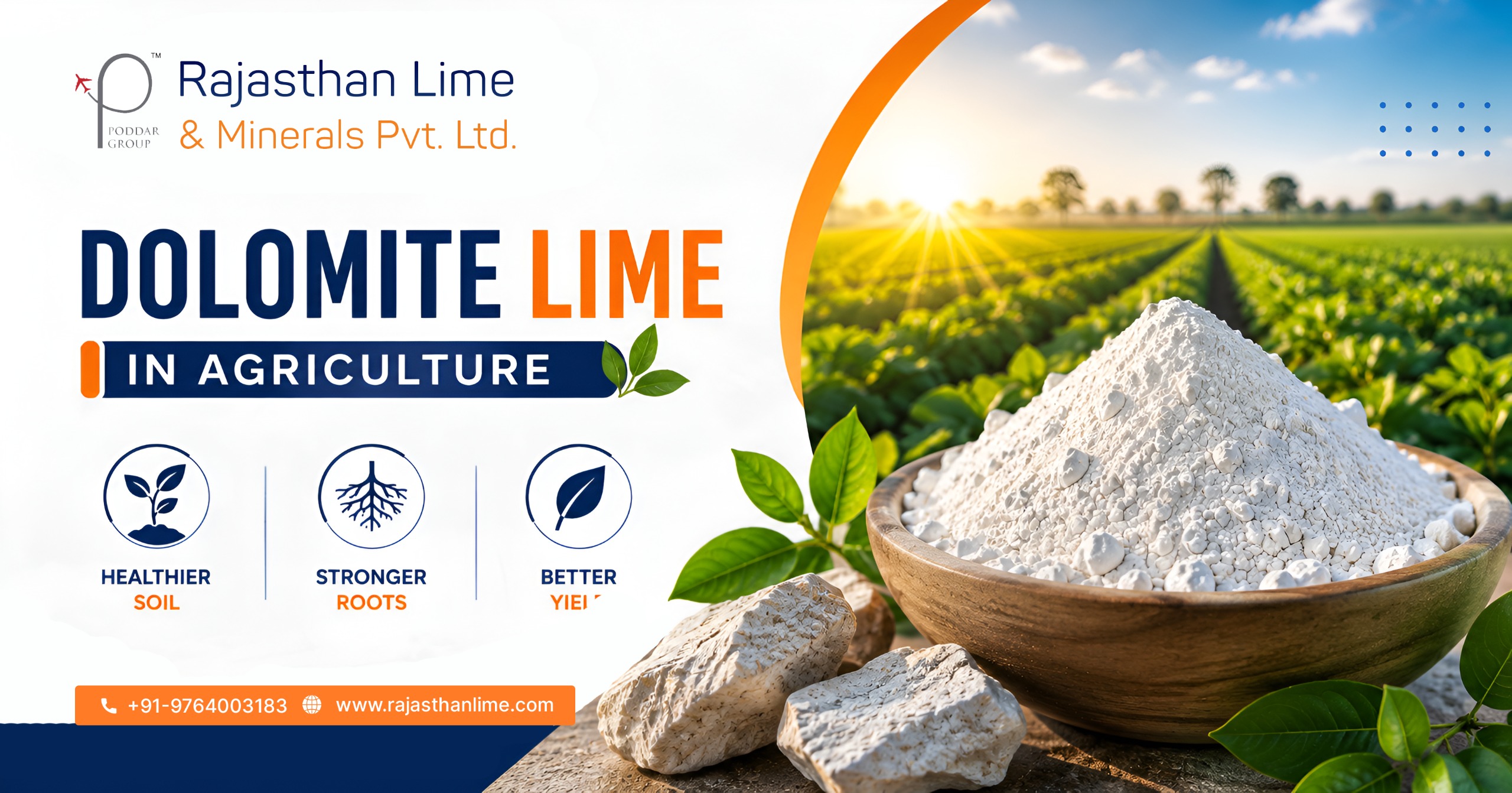
Dolomite lime is used across many sectors in India for different applications and procedures. One of those sectors is the agriculture sector, where it is used to correct soil acidity by supplying two essential plant nutrients: calcium and magnesium. Unlike ordinary calcitic lime, dolomitic lime is useful particularly in situations where acidic soil also has inadequate magnesium. To use it in the agriculture sector, you should ideally know about the benefits of dolomite lime in soil, along with its importance, which explains why it is used in agricultural needs.
What Are the Uses of Dolomite Lime in the Agriculture Sector?
Dolomite lime’s primary role in agriculture is managing acidic soil. For acidic soil, the following are some of its uses.
1. Correcting Acidic Agricultural Soils
Acidic soils can interfere with nutrient availability and may restrict plant growth due to the high availability of aluminium and manganese. Using dolomite lime helps:
- Neutralize soil acidity
- Raise soil pH
- Reduce problems associated with excessive acidity
- Support a more suitable chemical environment for crop roots
2. Supplying Magnesium to Crops
One of the most important reasons to choose the best dolomite lime products in Rajasthan for agricultural use is that it improves the magnesium content in the soil. It helps to:
- Supply magnesium along with calcium
- Address magnesium deficiency in acidic soils
- Provide a liming-based alternative to separate magnesium fertilizers where appropriate
3. Providing Calcium to Agricultural Soil
In many acidic soils, applying a suitable liming material like dolomite lime can address their calcium needs while correcting soil acidity. However, calcium should not automatically be added to soils that already have adequate levels. Dolomitic lime:
- Supplies calcium as the soil is limed
- Can help maintain an appropriate balance of basic cations in the soil
- Reduces the need for a separate calcium amendment when liming is already required
4. Improving Conditions for Nutrient Availability
The pH of the soil strongly influences how readily plants can access different nutrients. Extremely acidic conditions can reduce the effectiveness of some nutrients while increasing the availability of elements that may become harmful when present in an excessive volume. The use of dolomite lime on acidic soil helps in the following ways:
- Creates a more favorable soil chemical environment
- Can improve the availability of certain nutrients
- Helps reduce aluminium-related constraints in strongly acidic soils
What Are the Benefits of Using Dolomite Lime in Agricultural Applications?
The use of dolomite lime in the agriculture sector comes with many benefits. Many people get to know these benefits when they learn about dolomite lime and how is it different from limestone. The following are those major benefits that are important to know about:
1. Helps Raise Soil pH
The carbonate component of dolomite reacts with acids in the soil and gradually increases soil pH. Such use leads to:
- Neutralizing acidity
- Moving strongly acidic soils toward a more suitable pH
- Creating conditions favorable for many crops
2. Helps Reduce Aluminium Toxicity Risks in Acid Soils
Strongly acidic soils can increase the solubility of aluminium, which may restrict root development and crop productivity. The use of dolomite lime bought from limestone suppliers Rajasthan:
- Reduces soil acidity that contributes to aluminium availability.
- Supports better root development.
- Is relevant for crops sensitive to acidic soil conditions.
3. Supports Balanced Soil Fertility Management
Correcting pH through dolomite lime is considered a prerequisite for effective nutrient management because it:
- Addresses soil acidity.
- Supplies Ca and Mg in case of deficiencies of both.
- Helps farmers manage soil fertility based on actual soil conditions.
What Is the Importance of Dolomite Lime in Agriculture?
Dolomite lime carries great importance in the agriculture industry, mainly because soil pH is closely connected with nutrient availability, root conditions, and overall soil fertility, all of which are improved by the use of dolomite lime for acidic soil.
1. In Soil Amendment
Agricultural productivity depends on more than applying nutrients. Soil pH, nutrient balance, crop demand, and soil properties interact with one another. Dolomite lime can make a useful contribution when acidity is limiting the effectiveness of the broader nutrient-management program.
- It combines liming with the supply of calcium and magnesium.
- It helps align soil amendments with deficiencies in the soil.
- It supports more targeted input management.
2. Encourages Soil-Test-Based Agriculture
Extension guidance recommends using soil-test results to determine whether a greater volume of lime and magnesium is required in the soil or not. Quality of the material being used also matters because neutralizing value, fineness, moisture, and chemical composition influence performance.
- Test soil pH before application.
- Check soil magnesium and calcium content.
- Check particle size or fineness as it affects reaction speed.
- Follow local laboratory or extension recommendations for application rates.
Conclusion
Dolomite lime is an important agricultural soil amendment because it combines acidity correction with the supply of calcium and magnesium to all plants or crops. While it is a highly useful material, its efficiency also depends on the quality of the material you are getting.
To get the best possible quality of dolomite lime, contact us at Rajasthan Lime and fulfill your every need of lime products as well as limestone for industrial use at an affordable price.
Frequently Asked Questions (FAQs)
Q. What is agricultural dolomitic lime used for?
Agricultural dolomitic lime is primarily used for neutralizing the pH of acidic soil and supplying it with calcium and magnesium.
Q. What plants benefit from dolomite lime?
The use of dolomite lime shows the best benefits for plants that prefer neutral to slightly alkaline soil or heavy feeders that need extra magnesium, such as tomatoes, peppers, citrus trees, apples, pears, etc.
Q. Is agricultural lime the same as dolomite lime?
No, agricultural lime is not the same as dolomite lime. Agricultural lime is a broad term used for any crushed limestone or chalk used to lower soil acidity, while dolomite lime contains a mix of both calcium and magnesium carbonate.