
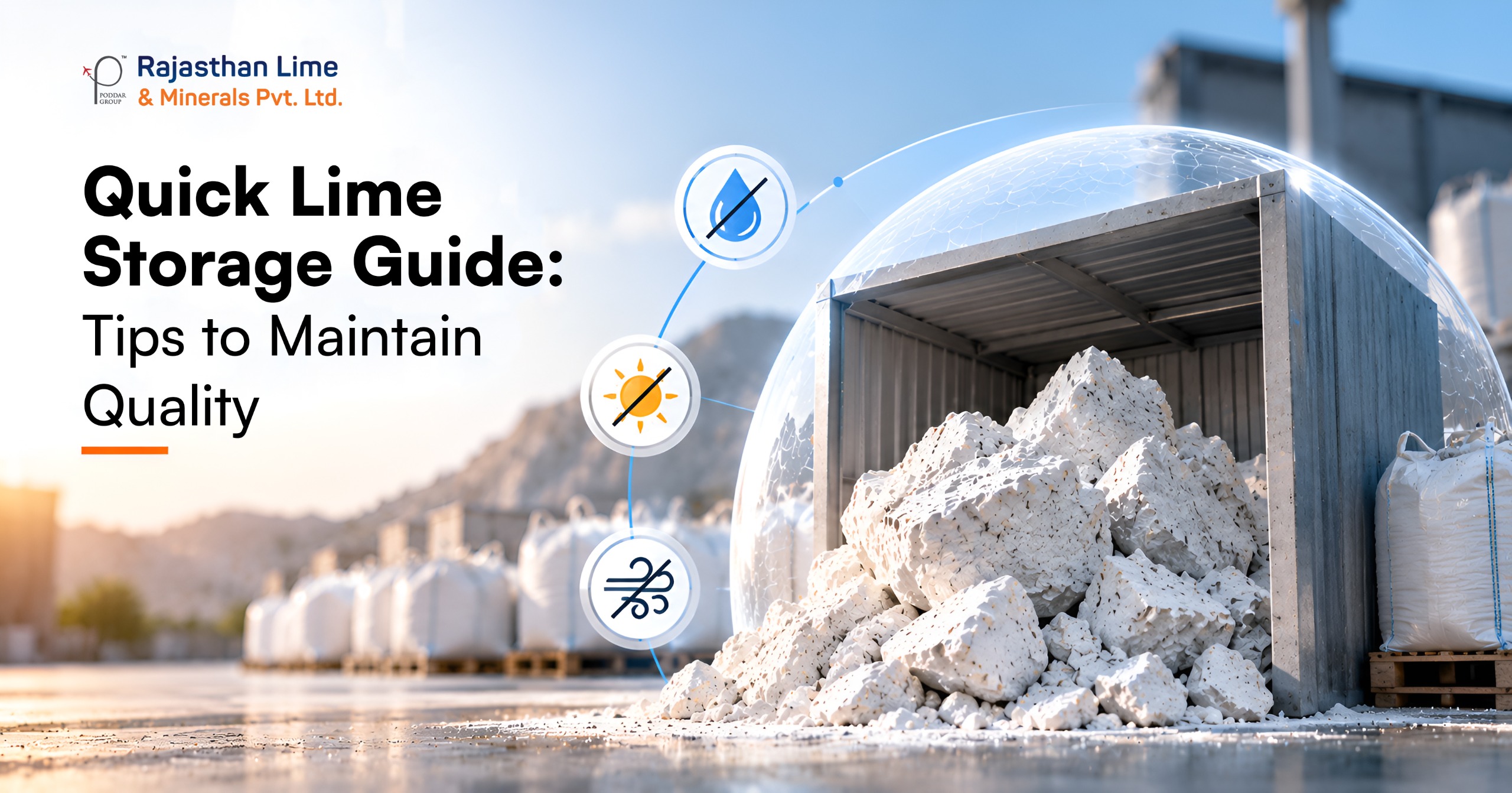
Quick lime, also known as burnt lime or unslaked lime, is a widely used material across the construction, steel manufacturing, water treatment, and other such industries. As the material is widely used due to its many industrial applications, the quality of the material should be maintained for its use to be effective enough. To ensure good quality of the material, storing and handling it properly yourself is as important as getting it from a trusted supplier. For proper quick lime storage, experts recommend that you choose a dry and covered storage area, pack it in airtight bags, and prevent water contact and contamination.
What Is the Best Way to Store Quick Lime?
After buying quick lime from one of the best quick lime manufacturers in Rajasthan, you need to store it safely so that its quality is not harmed. The following are the best practices you need to follow, which are recommended in the quicklime storage guidelines.
1. Choose a Dry and Covered Storage Area
The storage environment where quick lime is stored influences how well the quality of the material can be preserved.
- Select a warehouse with a dry environment and no water leakage.
- Keep quick lime away from water pipes.
- Use pallets or suitable raised platforms to keep bags off the floor.
- Avoid storage locations where condensation regularly forms on walls or ceilings.
2. Use Airtight and Moisture-Resistant Packaging
Quick lime should be kept and transported in sealed bags, bulk bags, tankers, or dedicated silos, depending on the quantity and application.
- Keep the material in its original packaging whenever possible.
- Reseal opened bags properly.
- Store bulk quantities in properly designed, closed silos or compatible storage vessels.
- Inspect bags for punctures, damaged seams, wet patches, and hardened contents.
- Do not transfer quick lime into ordinary containers unless their material and design are confirmed as suitable.
3. Control Humidity and Prevent Water Contact
Quick lime storage requires moisture control rather than simply keeping the product out of direct rain.
- Keep quick lime separate from wet cleaning areas, drains, water tanks, and washing stations.
- Keep scoops, conveyors, and all the transfer equipment dry before using them for quick lime.
- Avoid opening bags unnecessarily or leaving containers exposed during loading.
- Use appropriate humidity monitoring where the scale of storage and operating conditions justify it.
4. Prevent Contamination During Storage
Quick lime can lose suitability for its intended application if it becomes mixed with other chemicals, dust, debris, or other such materials.
- Keep quick lime away from acids and incompatible chemicals.
- Do not share handling equipment with other materials unless it has been appropriately cleaned and dried.
- Keep food, animal feed, and household supplies in separate storage areas.
- Label containers clearly with the product name, relevant hazard information, and batch details.
- Prevent dust, packaging fragments, and other foreign substances from entering the material.
Why Is Proper Quick Lime Storage Important?
Many users who purchase quick lime for industrial use do not understand the need for proper storage and handling of the material, which directly affects their results. The following are some factors that explain why proper quick lime handling and storage are important.
1. Maintains Chemical Quality and Reactivity
Quick lime moisture protection is necessary, as exposure to moisture can cause hydration. This directly reduces the chemical properties of the material. By keeping the product dry and properly sealed, you can:
- Preserve the material’s calcium oxide content.
- Reduce hydration and carbonation.
- Support more predictable performance in industrial applications.
- Reduce the likelihood of needing additional quality checks or replacement stock.
2. Reduces Material Waste and Operating Costs
Quick lime, when harmed by moisture, is unlikely to perform effectively. Depending on how much the quality of the material has deteriorated, you may need to test the material, adjust the process, or consider it a waste. Proper storage and handling helps:
- Reduce losses caused by damaged bags and contaminated material.
- Maintain consistent material consumption in production.
- Improve inventory planning and reduce unnecessary handling.
What Happens If You Ignore Quick Lime Storage Guidelines?
There are many harms that you and quick lime are sure to face after buying it from any of the quick lime or hydrated lime manufacturers in India if you ignore the guidelines on how to store quick lime and handle it properly. The following are these harms explained:
- Calcium oxide content would decrease.
- The material would form hard lumps.
- Too much heat would be generated, enough to cause burns.
- Dust would be released into the surrounding air.
Conclusion
Proper quick lime storage is essential for preserving chemical quality, reducing material waste, and protecting workers from moisture-related reactions and dust exposure. By ensuring the proper storage and handling of the material, along with choosing the right manufacturer who provides good-quality material, you can make the best use of it. Purchase it from Rajasthan Lime and start your operations now.
Frequently Asked Questions (FAQs)
Q. Can you touch quicklime?
Yes, you can touch quicklime, but only by wearing gloves. If you touch it with bare hands, you may suffer burns.
Q. Does quick lime absorb moisture from the air?
Yes, quick lime does absorb moisture from the air and releases heat to form slaked lime.
Q. What does quicklime do to the human body?
Quicklime causes thermal and chemical burns to the human body on contact.