
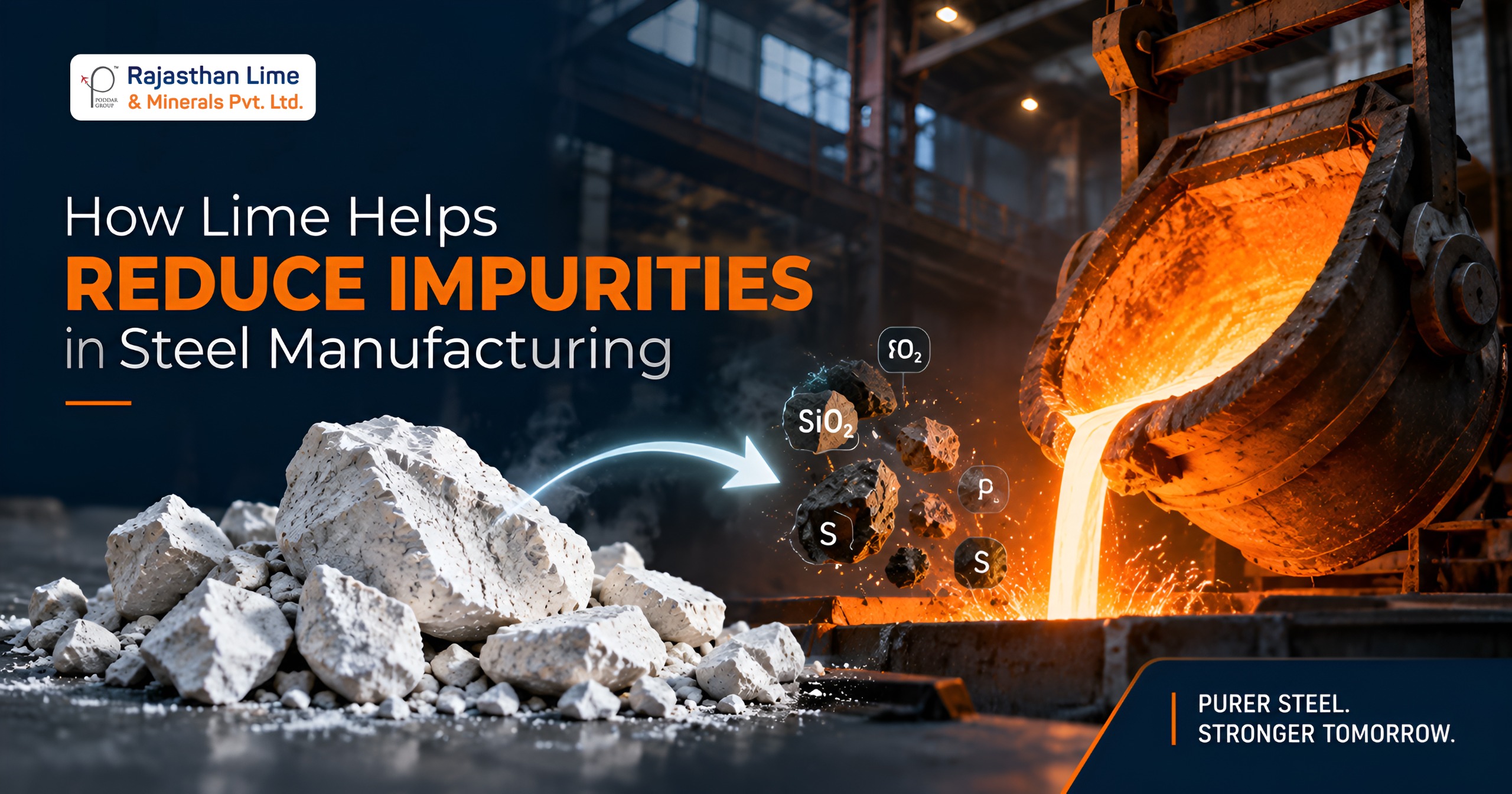
The process of steel manufacturing is a very long one and involves several steps that are important for producing the best output. This process involves removing a lot of impurities like silica, sulphur, phosphorus, and other oxides that can affect the quality and performance of steel. To remove these impurities from iron ore, scrap, coal, and other raw materials, lime is used as an important steelmaking flux in the blast furnace, Basic Oxygen Furnace (BOF), and Electric Arc Furnace (EAF). For using lime correctly in the steelmaking process, you need to know how the material helps reduce impurities in steel manufacturing, including the properties that influence this use of lime.
How Does Lime Help Reduce Impurities in Steel?
Lime in steelmaking helps reduce impurities mainly by increasing the basicity of the slag and providing calcium oxide that can react with unwanted components. Depending on the steelmaking stage and process conditions, lime contributes particularly to the removal of silica, sulphur, and phosphorus. For the same process, industrial buyers also depend on hydrated lime bought from hydrated lime manufacturers in India. The following are some ways explained in which lime helps reduce impurities in steel:
1. Reacts with Acidic Impurities
One of lime’s fundamental functions is to react with acidic oxides, particularly silicon dioxide, which contains silica. While using lime for impurity removal in steel, lime combines with silica and forms calcium silicate along with other compounds that become part of the slag rather than remaining in the metal.
- The resulting compounds become part of the slag phase.
- The slag can then be separated from the molten metal.
- This reduces the concentration of unwanted oxides in the metal.
2. Supports Sulphur Removal
High concentrations of sulphur can harm the properties of steel as well as the overall process of steelmaking. The role of lime in steel production involves the use of lime-based fluxes in hot-metal desulphurization and secondary steelmaking to remove sulphur.
- Lime supplies calcium for capturing sulphur.
- The sulphur moves from the metal into the slag phase.
- Low oxygen activity helps in sulphur removal.
3. Contributes to Phosphorus Removal
Excessive phosphorus can harm the properties of several grades of steel, and hence, its volume needs to be controlled with the use of lime bought from the best lime steel manufacturers in Rajasthan.
- Lime increases the basicity of the refining slag.
- Oxidized phosphorus can be incorporated into the slag.
- Process conditions must be controlled to prevent phosphorus from returning to the metal.
4. Helps Form a Removable Slag
The part of the process that defines how lime removes impurities in steel is its contribution to slag formation, which includes a combination of several impurities that are removed together.
- Impurities are transferred from the metal into slag.
- Slag floats above the molten metal because of its different density.
- The slag is removed during the steelmaking process.
- Proper slag chemistry also supports heat and refractory management.
What is the Overall Role of Lime in Steel Production?
Lime plays a significant role in steel production that is not limited to just removing impurities. Here is what lime bought from reliable lime exporters India brings to steel production:
1. Helps Control Slag Chemistry
Steelmaking slag needs to have the right chemical and physical properties for the specific operation. Lime is one of the principal materials used to adjust this chemistry, which explains a major use of lime in the steel industry. It helps to:
- Influence slag basicity.
- Support reactions with acidic oxides.
- Establish conditions suitable for impurity transfer.
2. Supports Refractory Protection
Steelmaking vessels are lined with refractory materials designed to withstand extreme temperatures and chemically aggressive slags. Therefore, slag chemistry needs to be controlled, not just for impurity removal, but also to provide protection from refractory wear.
- Helps establish the desired slag chemistry.
- Influences the viscosity and melting behavior of slag.
- Supports controlled furnace operation.
| Stage of Steelmaking | Contribution of Lime |
| Blast furnace | Forms slag |
| BOF | Supports the refining of slag |
| EAF | Contributes to lime-rich refining slag |
| Hot-metal desulphurization | Provides CaO for removing sulphur |
| Secondary steelmaking | Maintains the CaO-based slag for refining |
Frequently Asked Questions
Q. What is the purpose of lime in the steel industry?
Lime is used in the steel industry to remove impurities like silica, phosphorus, and sulphur, protect furnace linings, and support the appropriate slag composition.
Q. What are the main components of steelmaking slag?
The main components of steelmaking slag are calcium oxide, silicon dioxide, iron oxides, magnesium oxide, aluminium oxide, and manganese oxide.
Q. Why is lime added to the blast furnace?
Lime is added to the blast furnace to remove acidic impurities from the iron ore and form molten slag.
Conclusion
Lime for steel manufacturing plays an important role in the overall process because its calcium oxide content helps steelmakers control slag chemistry and remove the presence of impurities that can harm the overall quality of metal. To make sure that the overall process of steelmaking gives the best output, it is important that you use the right quality of lime from trusted lime and limestone suppliers India.
If you are currently looking for the best lime provider, then end your search at Rajasthan Lime. Contact us and get your need for industrial lime fulfilled with the best quality as well as price.