
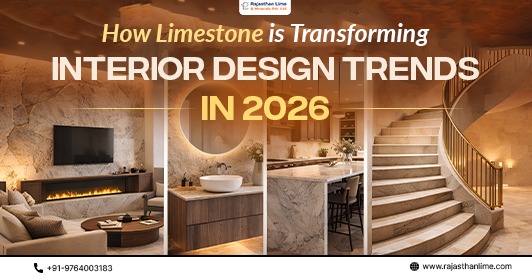
The interior design trends in 2026 have always been driven by factors like aesthetics and sustainability. In 2026, the trend with the said factors continued, but with the involvement of limestone, a natural sedimentary stone formed primarily from calcium carbonate, found in abundance in Rajasthan. It is most preferred by architects and interior designers who seek warmth, durability, and environmental credibility. The trend of use of limestone is led by the preference for tactile and organic materials, which it fits naturally.
What Led to the Trend of Limestone in Interior Design?
The growing use of limestone aligns well with broader movements in architecture, sustainability standards, and user preferences, resulting in better ageing, reduced environmental impact, and wellness-oriented design. Apart from long-term sustainability, several factors that drive the trending use of limestone in interior designing from limestone manufacturers Rajasthan are:
Shift Toward Natural and Biophilic Design
Biophilic design integrates natural materials and elements into built environments to fulfill the need for natural textures and materials to improve comfort and perceived well-being. Limestone supports the creation of such a design because it:
- Provides organic texture and subtle variation
- Reflects natural light softly
- Ages in a way that feels authentic rather than worn-out
Demand for Neutral and Earth-Toned Interiors
As per reports, some of the most preferred shades loved in a typical home’s interior include the likes of beige, sand, taupe, and warm greys, as dominant themes in 2026. Limestone helps as the material naturally exists in these tones.
- Limestone’s mineral composition maintains tonal stability when properly sealed.
- Attractive for long-term interior projects
What is the Use of Limestone in Interior Design?
The use of limestone in interior or architectural design serves both functional and decorative purposes. It is used at several places instead of granite or quartzite due to the softness of the material, which makes it easier to cut and shape. Below are the most common uses in 2026 interior projects:
1. Limestone Flooring
Limestone flooring is popular in living rooms, foyers, and luxury retail spaces. It provides a matte, natural finish. Its common finishes include:
- Honed (smooth, matte surface)
- Tumbled (textured, rustic look)
- Brushed (slightly rough with soft edges)
- Polished (less common due to limestone’s porosity)
2. Wall Cladding and Feature Walls
Panels made of limestone are heavily used for accent walls as their presence creates subtle depth without overwhelming the space. The applications of limestone in this aspect can be seen in:
- Living room walls
- Lobby and reception backdrops
- Spa and wellness center interiors
- Bedroom headboard walls
3. Countertops and Vanity Tops
Though marble and quartz are preferably used in the making of kitchen countertops, limestone is gaining popularity in bathroom vanities and low-impact kitchen designs. When used appropriately, it offers a softer and more organic alternative to highly polished stones. On its use, professionals typically:
- Apply penetrating sealers
- Recommend immediate spill cleaning
- Avoid use in extremely high-acid environments
4. Decorative Elements and Custom Fabrication
The use of limestone in designing normally allows a designer to experiment with geometry and texture without raising the fabrication costs to an excessive stage. It is frequently used for:
- Carved wall panels
- Custom sinks
- Sculptural lighting bases
What are the Benefits of Using Limestone in Interior Design?
In a time when the use of limestone is growing, it’s important to understand the benefits that support the growing trend of its applications. Its various forms used by designers, architects, and project managers also involve calcined lime bought from calcined lime suppliers Jodhpur. The benefits of these forms include their performance, cost, maintenance, and sustainability, among many others.
1. Aesthetic Versatility
The key aesthetic advantages of using limestone in any of its forms in interior designing include:
- Use of its neutral base tones is compatible with wood, metal, and glass
- Soft surface reflection
- Seamless integration in large-format slabs
2. Thermal Properties
Natural stones such as limestone show thermal mass among their properties, which proves their ability to absorb and slowly release heat. In interior designing, such a property is utilized in temperature regulation indoors. In climates with moderate variation, limestone flooring can:
- Stay cool in warm weather
- Support underfloor heating systems efficiently
- Reduce reliance on artificial temperature control in certain designs
3. Workability and Customization
Limestone turns out to be suitable for bespoke interior elements rather than materials that are much tougher to cut and customize, due to its:
- Lower fabrication complexity
- More design flexibility
- Low risk of cracking during carving
- Cost-effective custom detailing
4. Long-Term Value
When properly installed and maintained, surfaces made of limestone can easily last for several decades. Additionally, the simple process of its maintenance involves periodic sealing and gentle cleaning, hence being a better choice in terms of quality and cost to use rather than several other materials. Its overall cost depends on:
- Site of extraction
- Thickness
- Finish
- Transportation costs
Conclusion
The process of limestone to final product involves turning it into a part of the interior or architecture of a typical house and offering it a rare combination of authenticity, durability, and sustainable potential. The several factors it is chosen for include its natural warmth, adaptability across styles, and long-term usability, all of which directly influence the trending growth of its use in interior design.
Contact Rajasthan Lime to get supplied with the best quality of lime, which is also available at an affordable cost, to fulfill your interior designing needs with perfection in the material.
FAQs
Q. What is the use of limestone in interior design?
Limestone is used in interior design to add a classy or elegant look to the interior, with a factor of sustainability and cost-effectiveness supporting it.
Q. Is limestone cheaper than marble?
Yes, limestone is cheaper than marble, which is why it is used in interior design as a replacement for several marbles.
Q. Can limestone be used for buildings?
Yes, limestone can be used for buildings, specifically the walls and floors, due to its properties like strength, durability, affordability, and resistance to weathering.